


As you drive through Potomac, it’s hard to miss the trio of old log cabins just north of Highway 200. These buildings have observed the comings and goings of the valley for over a century. This month, they marked another milestone when their caretakers, the Case Ranch, partnered with Five Valleys and a coalition of partners to permanently protect 2,330 acres of the ranch.
“I have a framed picture on my wall that was taken back in 1949,” says landowner Matt Case. “It’s of my dad and my aunt building a haystack the old-school way. My dad is on the back of the wagon with the horses, and my aunt is up against the haystack. It's such a lovely picture of the ranch. It reminds me of why we’re protecting it.”
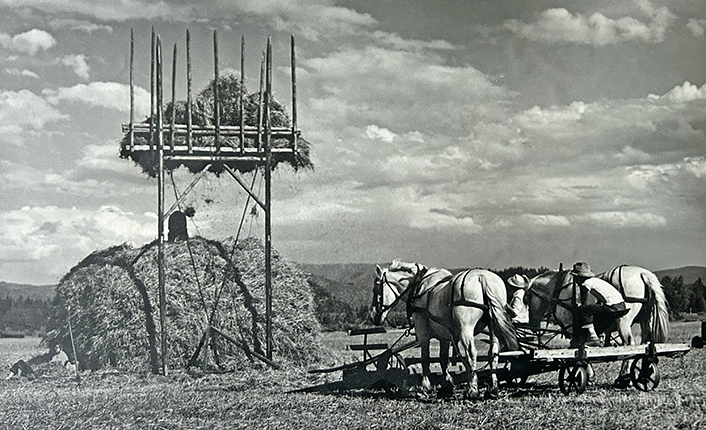
Arnold H. and Annabelle Case purchased a homestead in the Potomac Valley in 1932 and set out to become ranchers. Back then, valley didn’t look the way it does now. The Anaconda Copper Company had clear-cut the forests of the Blackfoot Valley to support their mining operation in Butte. The three buildings visible from the highway today once housed mule teams that were used to haul logs. Between the ongoing Great Depression and the hardscrabble work of ranching, life wasn’t easy.

“My mother told me she never ate beef until she was an adult,” says landowner Donna Hacker, who lives on the ranch today. “They sold the cows they had to the lumber people.”
Through the decades, the ranch expanded as it continued to produce cattle, forage, and timber. Arnold and Annabelle welcomed two children, Arnold and Julie. Today, the Case Ranch Company is comprised of seven cousins: The younger Arnold Case’s two children, and Julie Hacker’s five children.
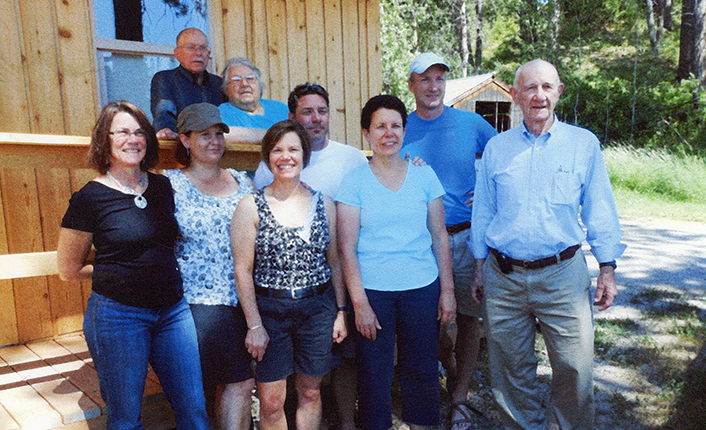
One summer the late 1970s, a young man named Gary Metzger was hired as a ranch hand. “He's a cow whisperer,” says Donna. “He selectively bred these wonderful, docile, beautiful Red Angus cows.” While the cows are now gone, Gary remains the ranch manager today.

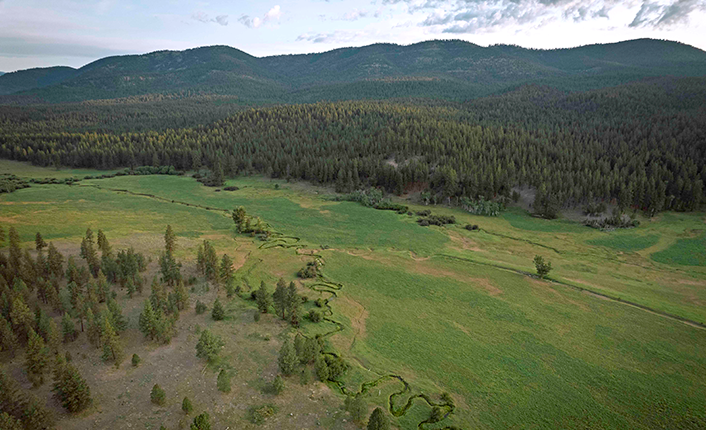
Potomac is well known for more than its agriculture. The valley sits at the crossroads between the Northern Continental Divide, Greater Yellowstone, and Bitterroot-Selway Ecosystems, providing essential habitat connectivity for wildlife. The Case Ranch’s mix of conifer forest, grasslands, lush meadows, and three miles of Union Creek frontage supports a tremendous variety of wildlife, including elk, moose, black and grizzly bears, native trout, raptors, and a variety of resident and migratory birds, such as sandhill cranes.
“I think that this conservation easement is the greatest thing for wildlife. We need open space that's not touched by any humans,” says Donna. “That includes traffic passing through the land, because it disrupts the habitat, which is in critical need.”

Donna’s cousin, Matt, agrees. “These meadows are beautiful places. Nobody wanted the ranch to be chopped up. That was a big motivator for a lot of us,” he says.
The conservation easement project was two generations in the making and required the buy-in of all seven current family members.
“The Case Ranch is important, not only for keeping working lands intact in the Potomac Valley, but for the wildlife that depend on the habitat and connectivity it provides,” says Derek Goble, conservation project manager with Five Valleys. “Thanks to the generosity of the family, Montanans will be able to access this landscape forever. We're immensely grateful to the Case and Hacker families, and the project's many partners, for their generosity and vision.”
The family has shared their ranch with the public for decades through enrollment in Montana Fish, Wildlife & Parks’ Block Management Access program. That public hunting access will now be guaranteed, forever. In support of the easement’s public access provision, the Montana Fish and Wildlife Conservation Trust contributed $100,000 towards the project.
"For 25 years, Case Ranch has been a part of the Block Management Program,” says Trenton Heisel, Montana Fish, Wildlife and Parks’ Region 2 Regional Access Manager. “Through the generosity of the Case and Hacker family and the collaboration with Five Valleys and Montana FWP, this is a prime example of how we can work together to ensure future access to these private properties. Montana FWP appreciates the gift of hunting access that the family has shared with the public and future generations."
For Donna, providing public hunting access was just the right thing to do. “The people who live in the Potomac Valley harvest meat from the wilderness to feed their families. They need that easy access,” she says. “Hunting is good for animal populations. And, I think the overwhelming majority of hunters are also stewards of the land.”

In recognition of the ranch’s many agricultural and habitat values, the project was supported by a diverse coalition of federal, state, county, and private partners. It was awarded $2.34M in funding from the USDA Natural Resources Conservation Service's Agricultural Land Easement program.
“NRCS has made preserving and protecting agricultural land an agency priority – continuing to put farmers first. In Montana, NRCS is working to reduce the loss of productive farmland and safeguard the long-term viability of America’s agricultural landscapes,” said Gayle Barry, NRCS State Conservationist. “This is because we know that supporting working lands by partnering with Montana ag producers and land trusts through conservation easement programs like the Agricultural Land Easements helps make farms, ranches, and the rural communities that depend on them more ecologically and economically sustainable.”
The project was also supported by Missoula County residents, through the Missoula County Open Space Bond program. In November 2024, the Missoula County Commissioners granted the project $994,550, the largest award in the open space bond’s history.
“The Case Ranch project is years in the making and exemplifies the open space bond program. It protects this iconic viewshed in Potomac while establishing a larger wildlife corridor free from development,” says Missoula County Commissioner Josh Slotnick. “We are grateful for everyone involved in this project, especially the landowners and Five Valleys Land Trust.”

In a unique partnership, The Montana Land Reliance, a statewide agricultural land trust, also contributed to the project.
“Projects like the Case Ranch conservation easement demonstrate what is possible when landowners and land trusts work together to protect Montana’s working lands,” says Katie Stokes, Managing Director of The Montana Land Reliance. “The Montana Land Reliance is proud to partner with Five Valleys Land Trust and the landowners to help ensure the Case Ranch remains part of Montana’s agricultural landscape for generations to come.”
The project’s importance at a landscape scale also attracted support from the Heart of the Rockies Initiative, a regional conservation organization.
"The Case Ranch conservation easement is incredibly significant for wildlife connectivity between the Potomac Valley and the Blackfoot River, permanently protecting the vital space migrating elk and mule deer, and for grizzlies moving between recovery areas,” says Gavin Ricklefs, Managing Director of Heart of the Rockies Initiative. “The Case Ranch represents the final, critical piece of conservation in an area that has been a conservation focal point in Montana for decades. What an incredible win. The Heart of the Rockies Initiative thanks the Case family, Five Valleys Land Trust, Montana FWP and other partners for creating this lasting legacy."

The $4.8M project was also made possible by contributions from the Cinnabar Foundation, Atira Conservation, the Case Ranch Company, and through community donations to Five Valleys. Five Valleys will hold the conservation easement in perpetuity while the land remains in the ownership and management of the Case Ranch Company.
When asked about her hopes for the future of her valley, Donna said,
“I hope that Potomac continues to have people that raise cattle, make hay. We have a great little school and a fabulous, tight-knit community. It's almost escaping the outside world, in a way. It's a safe and beautiful place. I hope more kids can have the childhood that I had, which was so precious. To be raised on a farm is not common anymore. I hope that many more little kids get to run barefoot and have their chickens.”
The proceeds from the easement will allow the family to take care of the ranch for generations to come. The historic Anaconda Company buildings will remain, keeping vigil from their now-conserved home. Yet, it is the wider community, and future generations, who will truly benefit from intact ranchlands and open wildlife habitat.
“From such humble beginnings, this family, Arnold and Annabelle Case’s family, created this ranch, made it work, and now it’s something that will be protected forever,” says Matt. “It feels really good for all of us to leave this legacy for this special place.”

Header photo: The Case Ranch by Dave Gardner
